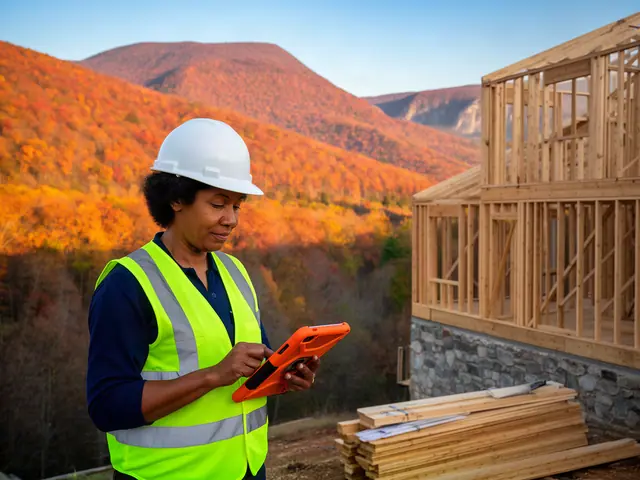
Contractors, specialty trades and service crews: draws, materials, vehicles and machines.
Contractors and Builders
789 construction employers in 2023, more than half under five employees. Draws, retainage, materials and machines. Contractor funding.
A construction request can start with a gap between paying for lumber and crews and receiving the next draw. Partners usually want the signed contract, the draw schedule and recent bank statements, plus a list of machines already financed. General contractors and specialty subs read differently, so say which you are on the first call.
Plumbing and HVAC Shops (Full Page)
125 shops with bigger crews than the construction average: vans, parts stock and install jobs paid on terms. Plumbing and HVAC funding.
Service tickets tend to pay quickly; installs and new-construction rough-ins pay on terms, sometimes with a holdback. Partners look at the split between service and install revenue, the parts-room value and van ages. The full page walks through a pay-application example.
Electrical Contractors
62 electrical contractors, 46.8% under five employees. Bucket trucks, lifts and wire stock are the usual requests, along with payroll during long commercial jobs. Equipment financing handles the bucket trucks and tools.
Commercial jobs often bill monthly on pay applications, so wire and fixtures are bought well before the money arrives. Partners read the job list, contract terms and bank statements.
Roofing Contractors
29 roofing employers, 65.5% under five employees. Materials are bought per job and paid before the homeowner or insurer pays, which suits a line of credit.
Insurance-claim jobs can take longer to pay than retail jobs, and a line drawn per job and repaid on completion keeps that timing visible. A job list with expected payment dates is the core record.
Landscapers and Mowing Crews
101 landscaping employers in 2023, plus 745 landscaping businesses without employees in 2024 (NES). Mowers, trailers and trucks are the core purchases; see equipment financing.
Landscaping business loans usually cover equipment replacement, with crews and fuel paid weekly while commercial maintenance contracts pay monthly. Partners commonly ask for equipment quotes, contract lists and bank statements. Mowers that wear out on a known cycle are easier to plan around.
Janitorial and Commercial Cleaning Crews
79 janitorial employers with 3,557 employees, a large payroll for the count, and 1,246 nonemployer cleaners (NES 2024). Payroll before contract invoices pay fits working capital.
Cleaning business loans are mostly about payroll timing: crews are paid weekly or every two weeks, while building contracts are invoiced monthly and paid on terms. A list of contracts with their billing amounts and payment history is the core of a request.
Painters, Concrete Crews and Excavators
No separate county counts are used here. Painters fund sprayers and crews; concrete and excavation firms fund mixers, skid steers and trailers through equipment financing.
These trades share the contractor pattern: materials and crews are paid during the job, and the general contractor or owner pays after. Machines are financed on their own; job-gap funding is read on contracts and draw dates.
Pool and Pest Control Companies
No separate county counts are used here. Both run service routes with trucks, tanks and chemicals bought ahead; vehicles and rigs fit equipment financing.
Route businesses often bill monthly or by visit, which makes revenue steadier than project trades. A partner commonly reads route counts or customer lists, retention and bank statements, along with quotes for the vehicles being added.
Facilities Support Services
95 facilities support employers, 58.9% under five employees. Contract payroll and supplies ahead of monthly invoices suit working capital.
These firms staff and supply buildings on contract, so they pay crews and supplies before the monthly invoice is settled. Contract terms, the client list and payment history are what partners commonly ask about. One large client paying late is the risk partners tend to ask about.