
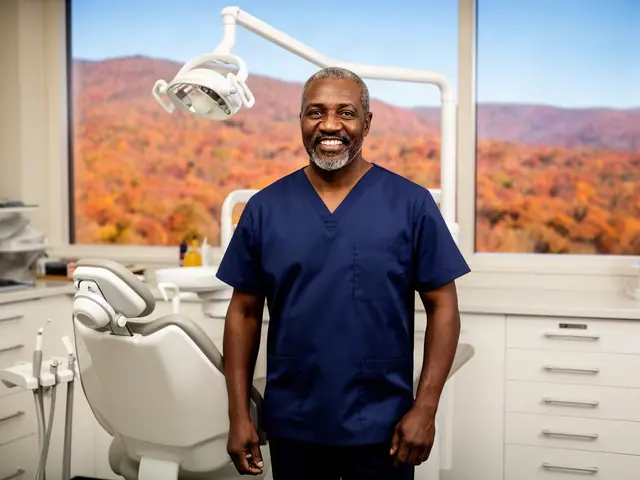
Wrenmoor Funding, a small-business funding service in Chattanooga, TN, places requests from Hamilton County, TN dental practices with funding partners. Typical needs are chairs and delivery units, digital imaging, practice software, operatory build-outs and working capital between insurance and patient payments; partners review collections and quotes.
| Dental practice employers, Hamilton County, TN | 177 (CBP 2023) |
|---|---|
| Firms with one to four workers | 31.6% (CBP 2023) |
| Paid employees | 1,428 (CBP 2023) |
| Nonemployer businesses | 67 (NES 2024) |
Where a Dental Practice Spends Before It Earns
Dentistry is equipment-heavy. Each operatory needs a chair, a delivery system, lighting, suction and imaging, and the practice as a whole needs sterilization, a panoramic or cone-beam unit and practice software. Most of it is bought up front, while revenue arrives over years of appointments.
Revenue also arrives in two streams: patient payments at the visit and insurance payments after claims are processed. A practice growing its insured patient base can feel that lag in payroll.
Dentists With Staff in Hamilton County, TN
| Measure | NAICS 6212 |
|---|---|
| Firms with a payroll (CBP 2023) | 177 |
| Paid employees (CBP 2023) | 1,428 |
| Wages paid over the year (CBP 2023) | $81.4 million |
| Share under 5 employees (CBP 2023) | 31.6% |
| Of those, inside ZIP 37406 (ZBP 2023) | not published |
| Firms without paid employees (NES 2024) | 67 (NAICS 6212) |
By our arithmetic the county's 177 employer dental offices averaged about 8.1 employees each and $57,025 of payroll per employee in 2023 (CBP). Only 31.6% had fewer than five employees, so most offices carry a hygienist and assistant payroll as well as the dentist.
Financing Chairs, Scanners and Imaging
Chairs, delivery units, intraoral scanners, CBCT and panoramic units, lasers and milling machines fit equipment financing. The equipment secures the deal, and the term tends to follow its working life. Bring the vendor quote with installation and training listed separately.
A new-operatory example (illustrative only)
A sample practice equips a fourth operatory: $31,000 for the chair and delivery unit, $14,500 for sensors and a scanner, and $19,000 of plumbing and cabinetry. The equipment is financed on its own; the fit-out sits on a term loan. Numbers are invented for the arithmetic.
Business Loans for a Dental Office Build-Out
A business loan for a dental office expansion, relocation or second site usually means a term loan, because the benefit arrives over years. Partners look at current collections, patient numbers, the lease and the contractor's quote. Permits and zoning for a new space come first.
Dental Office Working Capital
A dental office working capital loan covers payroll and supplies while insurance claims are paid, or a temporary dip after a provider leaves. Working capital is repaid on a short schedule; recurring gaps may suit a line of credit better.
The Dental File a Partner Reads
- Monthly collections and bank statements
- Insurance and patient-pay mix
- Equipment quotes and service terms
- The lease or purchase agreement for any new space
- Existing equipment and practice debt
Technology Upgrades on a Replacement Cycle
Sensors, scanners, chairs and software have their own replacement cycles. Practices that keep a simple list of each item's age and expected replacement year can plan purchases a year ahead and finance them one at a time, rather than facing several large bills together.
That same list shows a partner what is already financed and what is owned outright, which shortens the review.
Dental Plans, Lab Bills and the Payment Gap
- The patient's estimated portion is collected at the visit, often by card.
- The claim goes to the dental plan, which pays on its own schedule weeks later.
- Lab invoices for crowns and appliances arrive before the final seat appointment.
- Multi-visit treatment plans spread one case's revenue across months.
Payroll, supplies and lab bills keep their own dates regardless, so growth (more chairs, more cases) widens the gap before it fills it.
An Added Operatory (Illustrative Only)
A sample practice equips a new operatory: a chair and delivery unit at $28,000, cabinetry and plumbing at $12,000 and an intraoral sensor at $9,000, so $49,000. If the room adds six visits a day at a sample $180 collected per visit, that is $1,080 a day, or $17,280 over a 16-day month, before hygienist pay and supplies. All numbers are invented to show the arithmetic.
The chair, unit and sensor are equipment financing items; the cabinetry and plumbing usually sit in a term loan.
Business Loan for a Dental Office: Documents
- Production and collections reports by month for at least a year
- Receivables by payer and by age
- A payer mix summary (plans versus self-pay)
- Quotes for the chair, imaging unit or build-out
- The practice lease, with the years left on it
- Bank statements for the practice account, plus tax returns
Dentists Without a Payroll, Hamilton County, TN
Nonemployer Statistics counted 67 dentist offices with no paid employees in Hamilton County, TN in 2024, with $3.9 million in receipts (NES 2024, NAICS 6212). They are a separate group from the 177 employer practices in the 2023 County Business Patterns, and the two counts are not added.
Related Pages
Physician and practitioner offices have their own pages on the industry index, and county figures are on the Chattanooga, TN page. Patient financing for dental treatment is a consumer product and is not covered here.
By Wrenmoor Funding · Updated